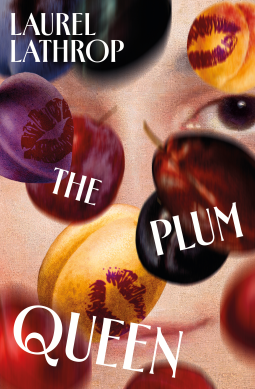
The Plum Queen is a long, retrospective, self-consciously literary novel about Lenore Harris, an elderly widow in 1984 who finally writes the story of the three great loves that shaped and erased her: Phoebe Eberhardt, her wealthy childhood friend and first love; Greta Filipowicz, her artist lover in postwar New York; and Howard Harris, her husband, a Stanford classicist whose career absorbed her own. It wants to be a novel about female friendship, queer desire, class, art, marriage, scholarly frustration, the Santa Clara Valley before Silicon Valley, and the terrifying question of whether a woman’s life counts if nobody makes art out of it. Mostly, it is an over-polished memory novel that keeps mistaking elegant retrospection for drama and treats every remembered dress, orchard, translation, painting, and betrayal as if it were automatically profound.
The book opens with Lenore burying Howard on the first day of the 1984 Los Angeles Olympics. After the funeral, her daughters Ruth and Phyllis leave, and Lenore sinks into a strange widowhood ritual: wine, pizza, Pepto-Bismol, leftovers, unopened mail, closed blinds, and endless television coverage of the Games. Howard’s death has not freed her so much as emptied the room around her. He died after a stroke while teaching, then lingered comatose at home, visited by students who knew him better as a public mind than Lenore sometimes feels she did. At his deathbed, she reads him Sappho, reaching back to the Greek fragments she once translated for him when they were first becoming lovers.
Then a letter arrives from Phoebe Eberhardt Cobb, Lenore’s childhood friend, first love, and old wound. Phoebe, now a famous widow herself, once published a memoir titled The Plum Queen. Howard had bought it years earlier, thinking it would amuse Lenore. Instead it frightened her. Phoebe had lived a dazzling public life: Eberhardt fruit heiress, failed wife of Frank Ryerson, scandalous lover and later wife of composer Martin Cobb, philanthropist, memoirist. When Lenore finally reads the memoir after Howard’s death, she discovers that she barely appears. Phoebe’s book covers the orchards, the family fortune, the Depression, her girlhood, but Lenore — who believed herself central — is reduced to one school friend among others. The insult is annihilating: the only living person who remembered her as a girl has written her out.