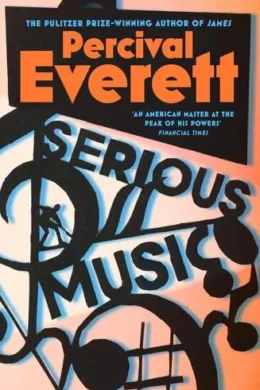
Percival Everett’s Serious Music follows Arthur Champion, a Black American musician, composer and former conservatory student, through war, racial terror, political conspiracy, exile and artistic recovery. The novel begins with Arthur declaring a philosophy of music: Black music is not merely rhythm, not merely folk expression, not an inferior offshoot of European harmony. It has its own harmonic intelligence, its own dissonance, its own silences, and its own grammar. That opening argument becomes the key to the story: Arthur’s life is shaped by people trying to define, use, steal, silence or mishear him, while he tries to find a music and a self that cannot be owned by them.
At the start, Arthur is at Oberlin Conservatory in 1918, dreaming of becoming a composer. He is one of very few Black students, and his closest friend is Will Harper, a viola player. Arthur is talented enough to be concertmaster, but his position is precarious. Racism is everywhere, sometimes blunt and sometimes disguised as civility. Their orchestra instructor, Whittle, is an old white southerner who never quite needs to say the racial slur he carries around in every sentence. Arthur’s violin teacher, Miss Mahler, is more musically generous, but even she praises him through the language of racial condescension.
The crisis at Oberlin begins when Olivia Bright, a white oboist, develops feelings for Will. She is naïve about the danger of her attention. Whittle, who has also been pursuing her, sees Olivia embrace Will after she escapes Whittle’s predatory behaviour. That moment becomes a threat to Will’s life. The college responds not by protecting Will and Arthur but by removing them. The dean, pretending to be helpful, arranges for them to enlist in the army and go to training. When Olivia comes to their room to confess her feelings, she only increases the danger. Whittle arrives with two white men to search for her; she survives by hiding on a high closet shelf. Arthur and Will leave soon after, not as heroes but as Black men pushed into war because staying in America is also dangerous.
Continue Reading for Free
Enter your email address to unlock the article and keep reading it for free.