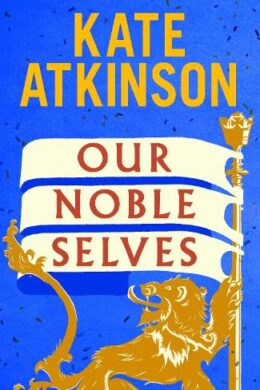
The new novel by Kate Atkinson unfolds in postwar Britain, beginning in 1949 and moving toward the summer of the Festival of Britain in 1951, using this moment of national self-reinvention as both backdrop and metaphor. At its center is Harry Flynn, a man presumed dead by many who knew him, including former colleagues, and who himself feels ghostlike in the aftermath of the war. Flynn is a journalist by training who was sent to the Far East during the Second World War and survived years as a prisoner of war under brutal conditions. When he returns to Britain, emaciated, ill, and psychologically shattered, he finds that the person he once was no longer exists. The war has hollowed him out, leaving him detached from ambition, emotion, and even language itself. His first attempt at rebuilding a life is a hasty, ill-considered marriage to Ivy Shears, a sharp, glamorous war widow with a young daughter and a small terrier. Flynn convinces himself that domesticity will provide healing, but the marriage is lifeless almost from the beginning, defined by mutual disappointment and emotional incompatibility. Ivy’s chatter, practicality, and expectations clash with Flynn’s silence and numbness, and the household becomes another form of confinement rather than refuge. Unable to sustain even this fragile version of normality, Flynn eventually leaves without explanation, abandoning both Ivy and her daughter, an act that reflects his inability to commit to narratives of redemption or responsibility that feel false to him.
Flynn’s life takes a new turn when he encounters Gerald Barry, his former editor, who recruits him to work for the Festival of Britain. The Festival is conceived as a grand national project meant to restore pride, optimism, and a sense of future after years of devastation, rationing, and imperial decline. It aims to present Britain not as a fading empire but as a modern, inventive, forward-looking society grounded in science, design, craftsmanship, and social reform. Flynn is hired not as a journalist but as a kind of literary generalist, drifting between tasks, editing, reading, and assisting wherever needed. This loose, undefined role suits him, allowing him to exist without being required to perform confidence or certainty. The Festival offices in Savoy Court become a strange sanctuary for damaged men like Flynn, a temporary harbor populated by others who have also been unmoored by war.
Flynn shares his cramped basement office with two other men: Evans, a melancholic Welshman who survived the Arctic convoys only to return to a broken marriage and distant children, and Badger, an affable, upper-class former intelligence officer with secrets he never discusses. Alongside them is a fourteen-year-old office boy known simply as the Boy, who is illiterate, irreverent, and endlessly observant, functioning as both comic relief and moral counterpoint. Together, this unlikely group handles the Festival’s overlooked, unwanted tasks, including the sorting of bizarre submissions for the “Eccentricities” exhibition. These rejected objects—automata, impractical inventions, peculiar artworks—form a quiet commentary on British ingenuity and absurdity, revealing how creativity persists even when it has no obvious place or purpose.