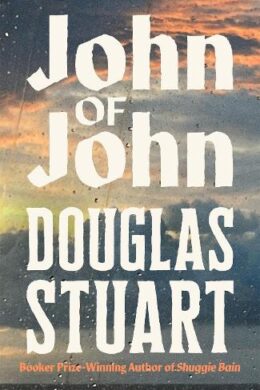
Set on the Isle of Harris during the 1990s, John of John is grounded in a vivid and striking Scottish landscape, with prose that immediately draws the reader in. By alternating between the perspectives of Cal and John, the narrative invites empathy for both men, even as they hurt one another. Although the central momentum of the story comes from Cal, John, and Innes—and the emotionally fraught relationship that binds them—the novel is populated with a rich array of secondary characters who deepen the sense of island life. While the story largely centres on male love and male experience, Isla and Ella stand out as powerful female presences. Ella in particular, the grandmother with a fondness for tanning beds, is delightfully unhinged and injects energy and humour into every scene she appears in. None of the characters are neatly heroic or villainous; they are flawed, contradictory, and deeply human, making it difficult not to become emotionally attached to them.
Due to its length, the novel engages with a wide range of themes, most prominently religion, masculinity, and sexuality. These ideas generally serve the forward motion of the story, though there are moments where the pacing slackens. Repeated depictions of lambing and the everyday routines of rural life occasionally feel excessive and could be streamlined or removed in an adaptation. Following the death of Cal’s friend Doll, the tone becomes persistently bleak, bordering on oppressive. While this heaviness is softened by the beauty and precision of the writing, translating such quiet, sorrowful, and introspective passages to screen may present challenges for film or television.
The use of Gaelic is particularly effective in illustrating the divided inner lives of the characters and offers a meaningful opportunity to foreground the language for a broader audience. Although the narrative is intimate in scale, focused on a small group within a closed community, the motifs of weaving and the looming threat posed by wealthy outside investors resonate far beyond the island. Together, they reflect a broader tension between tradition and change, and serve as a pointed commentary on the 1990s fixation with money and profit. Ultimately, the novel lingers in the mind long after it ends.
Continue Reading for Free
Enter your email address to unlock the article and keep reading it for free.