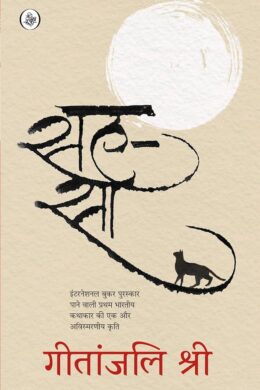
Geetanjali Shree’s novel All at Once is a meditation on aging, memory, and the slow disintegration of order within a household, told through the figure of Bhule Ram, a retired judge, his frail mother Amma, his wife Premlata, his daughter Lachhya, and the servants who circulate around them. The novel is divided into four sections—Na hona (not to be), Hona (to be), Anagat (what is to come), and Prarabdh (destiny)—but the story unfolds less as a straightforward plot than as a spiral of impressions, memories, repetitions, and small domestic events that together create a vast landscape of life at its most ordinary and its most profound.
The narrative begins with a strange jolt inside Bhule Ram’s body, a skipped heartbeat, an irregular tremor that unsettles his sense of balance. He had been watering his plants, rolling up a pipe, when he caught sight of his daughter Lachhya eating a motichoor laddoo that he himself had brought. The sight unexpectedly shakes him. The laddoo, an innocent sweet, becomes a trigger for memory: he recalls the many times he brought laddoos for his little girl, how she would demand fairy tales from him, correcting his words if he strayed from the exact version she wanted, crying at the same places each time, rejoicing when father and child in the story were reunited. Those rituals of storytelling, repeated night after night, represented the closeness between father and daughter. Now, seeing her grown, eating absent-mindedly, he feels a pang of distance, a reminder that time has altered their relationship. The laddoo, instead of sweetness, becomes a sign of alienation, and this shock is what sets his heart into its irregular beat. From this moment, the narrative develops the sense that the body itself is registering changes that the mind does not yet fully accept: that something is about to happen, though neither the characters nor the readers can quite tell what.
Life in the household proceeds in its repetitive rhythms. Amma, the elderly matriarch with her curved knees and fragile body, moves about on the wooden cart designed to ease her movements. She taps, mutters, and insists on her presence even in her frailty. Premlata, Bhule’s wife, manages the house but with constant complaints, railing against the servants, lamenting her burdens, and criticizing her husband’s detachment. Shambhu, the servant, and his wife bustle about noisily, sometimes efficient, sometimes careless, always subject to the scoldings of the family. Lachhya, the daughter, enters and exits, at times affectionate, at times rebellious, representing the younger generation’s independence and also its irritations. Amidst all this noise, Bhule maintains his retreat: he tends to his garden, his van-prangan, as if it were a sanctuary. He waters the plants, scolds the leaves gently, speaks to them as friends, and reads his newspaper with ritualized order.