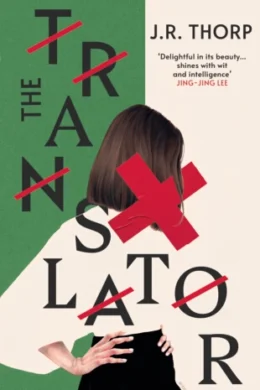
The novel is set in 2045, in an unnamed European state that has become increasingly authoritarian, nationalist and violently anti-immigration. The book opens with an official news bulletin concerning Paul Beauchêne, the editor of the literary periodical Modern Poetry & Thought. Paul has been convicted of sedition and crimes against the State because his magazine published a series of anonymous writings known as the Letters of Pytheas. The letters describe, from the inside, the work of a courier who illegally guides migrants across dangerous Alpine border routes into Europe, while also exposing police brutality, illegal deportations, the mistreatment of children, and the hypocrisy of a government obsessed with racial and national “purity.” Paul refuses to identify either Pytheas or the person translating the letters, and prosecutors are seeking a twenty-five-year sentence. The government has meanwhile forbidden the press even to mention the name Pytheas. The main narrative begins on 15 May 2045 with forty-nine-year-old Anne, a professor, gifted polyglot and long-serving official translator for the Ministry of Communications. At six in the morning she receives an extraordinarily polite telephone call from the Department of Justice informing her that police will come to her apartment at eight the following morning, 16 May, to arrest her for seditious publication, facilitating illegal immigration and conspiracy against the State. Anne is the secret translator of the Pytheas letters. She has been expecting discovery ever since Paul was arrested, but the certainty that she now has only one day of freedom changes everything. Rather than flee immediately, Anne decides she has several things to do: protect Pytheas, discover how the authorities identified her, make practical arrangements for her imprisonment and say goodbye, often without admitting that she is saying goodbye.
The identity of Pytheas is one of the book’s biggest spoilers, although Anne herself has always known it: he is Tomas, a young man she has known since he was a teenager. Their relationship began years earlier in the working-class outskirts of the capital where Anne grew up. As a girl, Anne was desperate to escape that world. Her father was a bus driver who secretly possessed considerable linguistic ability but refused to exploit it socially, while her mother worked in a laundromat and remained rooted in the neighbourhood. Anne was fascinated by language, status, beautiful clothes and precise manners. After seeing an elegant female representative of the nationalist Party speak in the local hall, she became fascinated not only with the woman’s politics but with her cultivated accent, silk and apparent self-command. Anne won a scholarship to an elite religious school, deliberately trained away her childhood accent and built herself into the cool, immaculately dressed intellectual she becomes. She eventually enters government service and, for decades, participates without much protest in the apparatus of the regime. She translates official speeches and documents even as the State becomes more racist, anti-migrant and repressive. Tomas initially appears as one of a group of teenage boys hanging around Anne’s old neighbourhood. He is intelligent, provocative and curious about her linguistic abilities. Later he calls her from a police station and asks her to bail him out. Anne does so, beginning a pattern that continues for years. Tomas is repeatedly arrested for protests and minor acts of defiance, and Anne repeatedly pays his bail without demanding gratitude. He has Arab family roots, learns Arabic despite his grandfather initially discouraging him, studies history, becomes obsessed with ancient trade routes, migration and the long history of human movement, and grows increasingly politically radical. Their bond is difficult to classify: Anne is not his mother, teacher or conventional friend, and Tomas actively resists being “saved,” but they become profoundly important to one another. Anne gives him a place where he can eat, rest and talk without being judged; Tomas is one of the few people who accepts Anne’s emotional strangeness without demanding that she become warmer or more conventional.
Eventually Tomas abandons an academic future and tells Anne he intends to work on the mountain migration routes. He asks her to translate letters he will write in Arabic and to find a way of publishing them. They choose the name Pytheas after the ancient Greek explorer whose lost writings survive largely because later writers quoted him in order to argue with him. Tomas gives Anne his copy of Strabo’s Geographica, containing Tomas’s full name, and this book becomes the most dangerous physical evidence connecting Anne to Pytheas. Anne approaches Paul, a colleague and editor of a small journal, with the translations. Paul agrees to publish them anonymously. The three of them develop elaborate security measures: burner phones, frequently changed SIM cards, handwritten translations, foreign servers and almost no direct electronic trail. Anne destroys used SIM cards in a marble mortar and disposes of the remnants. What they expect to be a minor series in an obscure publication unexpectedly explodes in popularity. Millions begin reading the letters. “Pytheas” becomes a banned but almost mythic name, appearing as graffiti and in coded references on social media. Protests grow even though demonstrations have largely been criminalised. The State suppresses discussion, attacks servers and arrests people helping migrants. Paul is eventually arrested, the magazine is closed and Anne immediately messages Tomas to stop sending letters. She receives no reply.