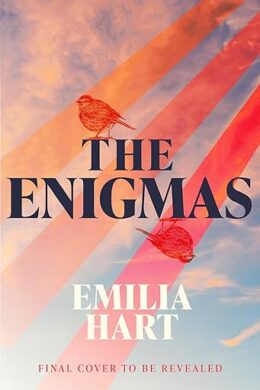
The Enigmas is an over-engineered time-slip Second World War novel that piles Bletchley Park, women doctors, inherited female trauma, magical memory, mother-daughter guilt, queer wartime secrecy, codebreaking, and alternate history into one very familiar package. It wants to be moving, intricate, feminist, romantic, and clever about “enigmas,” but it is mostly a relentlessly tidy machine. Every symbol announces itself, every emotional wound mirrors another emotional wound, and every historical setting arrives already decorated with the correct lesson.
The beginning is pure manipulative bait. In the prologue, Alice stands in November 1940 after an explosion, smelling cordite in her daughter’s bloody hair and telling herself she was supposed to keep her children safe. The line is meant to pull the reader into dread, but it also reveals the book’s whole method: take a mother’s guilt, place it under bombs, add a phrase from Newton — “Every action has an equal and opposite reaction” — and keep repeating the idea until there is no mystery left.
The main story begins in July 1940 with Beatrice Bone, twenty-eight, unmarried, living with her parents in Streatham Hill, and feeling like a spinster before her life has properly started. She is odd, bookish, death-obsessed, and fond of mourning dresses, skull earrings, old novels, and imaginary romantic heroes named Henry. Her father Frank is kind, wounded, book-loving, and missing a leg from the Great War. Her mother Alice is brilliant, cold, rational, controlling, and terrified that Beatrice’s childhood illness, encephalitis lethargica, might return. Beatrice wants to join the WAAF and do something brave, but Alice blocks her. The conflict is not subtle: imaginative daughter versus rational mother, story versus science, life versus safety, freedom versus maternal fear.