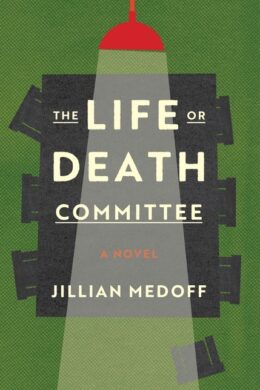
This novel is about the first years of long-term dialysis in Seattle and the secret lay committee that chose which kidney-failure patients would receive treatment when there were too many dying people and too few machines. It is also a story about guilt, class, race, marriage, medicine, faith, power, and the unbearable burden of judging another person’s right to live.
The book opens in 2020, during the Covid lockdown, with Tressa Hartley entering Swedish Medical Center to see Floyd Pomeroy, a ninety-nine-year-old former Seattle councilman who is critically ill with Covid. Floyd is not her father, but he is the closest thing she has left to family. Her mother, Margaret “Meg” Hartley, was one of the original members of the Life-or-Death Committee in the early 1960s, and Floyd was another. Tressa has always known that the committee did something secret and consequential, but she never knew the full truth. Floyd once said he wanted every possible “heroic measure” if death came for him. Now Tressa holds his power-of-attorney papers and prepares to fight for his life.
The novel then moves back to the patient whose fate frames the committee’s moral world: Franklin “Frankie” Fletcher. Frankie is born into Seattle wealth. His father, Cecil Fletcher, is a powerful Boeing executive from an old eastern family, and his mother Hildy is a timber heiress. The family has a history of kidney disease, but Frankie grows up as “Lucky Frankie,” the adored surviving twin. His twin sister, Frannie, lived only minutes after birth and is hidden from him for years. When he finally learns about her, he comes to feel that his survival carries a debt: he lived because someone else did not.
Continue Reading for Free
Enter your email address to unlock the article and keep reading it for free.