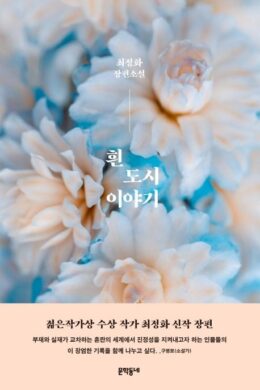
Three years into lockdown, L-City is a ghost of itself. Its crime rates have drastically increased— violent crimes as a matter of course (as the infected tend to lose empathy and even their awareness of others) as well as daggizo related scams/fake news. Pale imitations of their former selves, the residents have slowly gotten used to the horrors of the disease, to wasting away alone and mostly forgotten by anyone outside of their city. They have even created a separate waste category for the loose hands that litter the streets, an initially terrifying sight that has become commonplace. A group of infected residents called “white dogs” (can also read as “white ones”) are actively protesting the lockdown. They believe the central government has some sinister plan for L-City (which its residents are blindly accepting) and that’s why the city was locked down, not because of the outbreak. They assert daggizo is actually not that dangerous. The white dogs, though in various states of severe skin deterioration, stand out from the other residents due to their energy and sense of purpose. Strangely enough, most white dogs haven’t lost their hands, an oddity in a society where every other infected person has lost a hand or other extremities. Dong-hui recently failed a test that all government employees must take regularly to make sure they’re still qualified for their posts. He is temporarily reassigned to the record keeping center as his continued employment by the city is reassessed. Shortly after, he meets the new head of the white dogs, Hui-ra Jung. Though she is a little older now (in her teens), Dong-hui recognizes her as the little girl his wife had befriended years ago, saying she looked just like their daughter Go-yoh. Back then, he instantly took a dislike to the young Hui-ra and after dropping her off at her home in the Sand Village (the poorest part of town, the barricaded outpost of the white dogs), the couple never sees the girl again. By the time he meets Hui-ra as the leader of the white dogs, he and his wife aren’t together anymore. He barely recalls his daughter. Before they separated, his wife lost her right hand to daggizo and the rest of her symptoms accelerated alarmingly. Some time later, he is shocked to see her when she comes to his office to register for disability/welfare benefits. He recognizes her but she has no idea who he is and what he was to her.
Five years into the lockdown, the white dogs have stepped up their protests— they demand their right as citizens to look at records, to check the shipments trucked into L-City. They believe that L-City is slowly being turned into a dumpsite for waste materials and that the central government has cut off their city to everything outside it to create an enormous landfill for hazardous waste. After years of protest, the city agrees to let the white dogs access all city records, search the trucks, look at anything they want to try to find proof of their suspicions. Dong-hui has been reassigned to the record keeping office due to his poor test results. He also becomes infected and his right hand ultimately falls off. While he is working with his new coworker Kei at his new job, he experiences temporary periods of partial blindness (at times, all he can see are shapes/lights) and bouts of forgetfulness. He loses himself in this desensitized, sterilized version of reality and finds it surprisingly comfortable to deaden his emotions. As his symptoms worsen, he also loses all memory of his wife and his daughter. He starts to lose his sense of himself as an individual. He wakes from this fugue state only to stumble upon a shocking revelation: the children have mysteriously disappeared from L-City. Census records show the only children remaining in the area are in Sand Village.
Dong-hui heads to Sand Village and meets Hui-ra again—he doesn’t remember her but she remembers him. She tells him there aren’t any children in the village either. She is the closest in age to being a child at 18. Back in the office, he and Kei admit they remember the other saying they had had a child at some point. Dong-hui doesn’t know for sure whether he was ever married, ever lived with someone he loved, let alone had a child. Kei pulls him aside to tell him Sand Village doesn’t exist anymore— it’s been condemned and is empty of any residences. She worries that he is rebelling against the disease and living inside a world of his own making. Alarmed, he visits the village again where he sees people living their lives and going about their business, supremely unconcerned whether L-City residents believe they exist or not. He also sees a child, the first he has seen in years. He realizes that it’s Kei who is wrong. Like everyone else in L-City, she doesn’t want to look, doesn’t want to search for the missing children, doesn’t want to know what it means that the children are gone. But here in Sand Village, the white dogs are actively rebelling against such complacency. Dong-hui starts to think he might find Go-yoh if he can learn how to be like the white dogs. Back in the office, he finds a video interview of himself in Kei’s computer (her job is to erase the records he compresses and replace them with new, made-up records) from five years ago. It’s an interview of him reporting Go-yoh’s infection. He erases all records of himself and replaces the info with a new record of him failing the second reassessment exam and resigning from his job. He will live in Sand Village so he can learn how to fight the spread of daggizo within himself and search for his daughter.