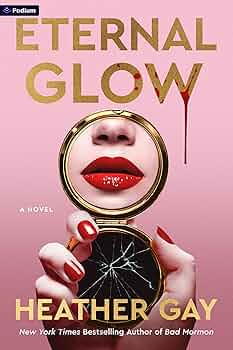
Eternal Glow is a satirical horror-thriller about beauty culture, Mormon social pressure, female friendship, shame, vanity, and revenge. The narrator is Celeste Harper, a Utah Latter-day Saint wife and mother who is terrified of being ordinary, ageing, poor, exposed, or socially cast out. She lives in a world where spiritual virtue and physical perfection are tangled together: a woman’s face, home, marriage, children, clothes, and church service all become proof that she is “blessed.”
Celeste belongs to a polished ward social circle with three important women: Sophie, her glamorous best friend; Marisa, the elegant queen bee who controls church events and status; and Lydia, a sharp, jealous rival who is always watching for weakness. Celeste desperately wants to belong among them. But her real life is collapsing. Her husband Brayden has lost his job and spends too much time on the couch. Their debts are mounting, the mortgage is in danger, and Celeste hides bills and late notices. She also hides a history of postpartum depression and psychosis after the birth of her daughter Aspyn, including a terrifying incident involving Aspyn in the bathtub. Celeste has buried this past under makeup, church service, expensive-looking clothes, and relentless self-control.
The novel opens with a prologue in which Celeste is already trapped on an exam table, in terrible pain, while a woman prepares to inject her. A hymn plays in the background. Celeste thinks that everything is her fault and that she should have followed God instead of vanity. The scene then cuts back to show how she got there.
Continue Reading for Free
Enter your email address to unlock the article and keep reading it for free.