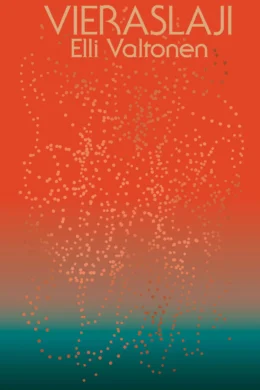
Vieraslaji is a near-future dystopian novel narrated by Siina Kesäheinä, a veterinarian living in a Finland already profoundly damaged by pandemics, climate change, ecological collapse and the disappearance of familiar animal species. The story opens with a bizarre piece of news: an unknown creature has been photographed in the mountains of Crete. It has four legs, a body resembling a large feline predator, feathered wings and a face that some observers think looks human. Because it resembles the creature of mythology, people begin calling it a “sphinx.” At first the discovery seems almost miraculous. In a world where species are constantly vanishing, humanity has unexpectedly found something new. But the wonder barely has time to exist before people capture, transport, dissect and commercialize the animals. A dead female is discovered in a warehouse in Sicily, apparently abandoned by smugglers, and its autopsy produces a biological puzzle: the animal combines mammalian and avian anatomy in ways that should not be evolutionarily possible. It is eventually classified as Sphynx sphynx. Even stranger is its reproductive biology. The first captive animals are all female and can reproduce through parthenogenesis, effectively cloning themselves. Pregnancy is triggered when a sphinx consumes a small quantity of human tissue or blood. During lactation the females crave blood, preferably human, although cattle blood can sustain them. The animals can otherwise live for long periods on poor plant food. This grotesque combination of a blood-triggered reproductive cycle and an otherwise peaceful herbivorous existence makes them simultaneously valuable, frightening and easy for humans to exploit.
Siina is particularly vulnerable to what happens next because her entire adult life has been shaped by animal suffering. She works as a state veterinarian in Helsinki, much of the time performing border inspections on imported animal products. She checks shipping containers filled with fish, meat and other remnants of animals, verifies endless codes and certificates, and experiences the bureaucracy of transforming dead bodies into legally approved commodities. She has also survived the devastating marvid-32 pandemic. The disease was far deadlier than earlier coronavirus and influenza epidemics and infected domestic animals as well as humans. During the crisis Siina was one of the veterinarians sent from farm to farm killing infected livestock. She personally participated in the destruction of enormous numbers of animals, an experience that has never left her. She remembers bodies, heads and necks in overwhelming quantities and feels that some part of her became mechanically separated from herself during the killing. Her father Heikki, a doctor, died near the end of the pandemic, just when a vaccine made Siina believe he might survive. Siina now lives with Aatos, Heikki’s widower and the person who largely raised her while Heikki was constantly working. Aatos is intellectually brilliant, eccentric and deeply compassionate, but he has recurrent, severe periods of depression and mania. He studies and teaches philosophy without ever settling into an ordinary career, obsesses over disappearing birds and species, and has become Siina’s remaining family. Their relationship is reversed in adulthood: Aatos cared for Siina as a child, whereas Siina now feels responsible for keeping Aatos alive when his depression becomes dangerous.
Siina herself is psychologically unstable in ways the novel deliberately refuses to explain neatly. She is face-blind and often recognizes humans by their voices, clothes, movement or other details rather than their faces. She also has strange perceptual episodes around animals. Sometimes she seems capable of sensing memories or consciousness inside animal bodies; sometimes reality breaks into patterns, lights and visions. These experiences may be neurological, traumatic, mystical or some combination of all three. Her closest new relationship is with a colleague whom she nicknames Miss Vantaa. Miss Vantaa has a warm voice, a practical temperament and a dry sense of humour, and Siina gradually becomes emotionally dependent on them. Attraction grows through phone calls, work encounters, shared disgust at what they see professionally, and eventually physical intimacy. Siina initially resists because attachment means creating another person she can lose, but Miss Vantaa becomes one of the few people capable of reaching her.