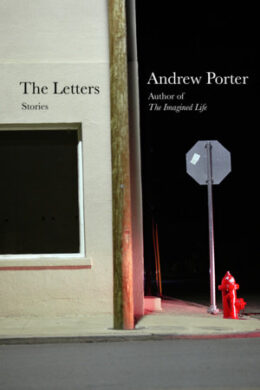
The Letters opens with a fifty-year-old university professor in San Antonio receiving a stream of letters from his eighty-four-year-old mother in California. She writes them to people who mattered to her and emails them to her son for proofreading. Gradually, he realizes they are really goodbye letters: attempts to settle old emotional accounts before age or memory makes it impossible. His father has already died, while the narrator himself is divorced from Katherine, has two middle-school daughters he sees too little, and is dating Erin, a divorced sculpture professor who lives in the same Southtown apartment compound. One letter is addressed to Eleanor, a woman his mother knew in college and then lived with for two years in Brooklyn. The narrator initially interprets it as unusually intimate; Erin immediately reads it as a love letter. The mother writes that her years with Eleanor may have been the happiest period of her life and asks whether Eleanor felt the same. The discovery unsettles her son less because his mother may have loved a woman than because he had always imagined his parents’ marriage as the defining emotional story of her life. He realizes there was an entire hidden life before him. At the same time, his mother begins showing worrying memory lapses, forgetting conversations they had only days earlier. The narrator also faces his own inability to move forward: he lives far from his daughters partly to avoid Katherine and her new partner, Noel, while Erin doubts that he is truly over his ex-wife. He finally decides to move closer to his children and invites Erin to move with him. Shortly afterward, his mother mails him a long physical letter addressed directly to him, telling him that its contents are merely something he needs to know. He does not open it immediately. Instead, he goes out with Erin, telling himself he can read it later because he has “all the time in the world.” The story ends there, making that confidence deliberately ominous: his mother is preparing for disappearance while he still behaves as though important truths can safely wait.
Sleepless is a tiny companion piece about a father whose six-year-old son wanders around their old mission-style house at night because he cannot sleep. The boy stands silently in the courtyard or on a balcony, disturbing his father because he seems so strangely inward. The narrator’s wife tells him the boy is exactly like him: restless, sensitive and lost. Sitting beside his son one night, he becomes aware that they will eventually leave this beautiful but impractical house and that his son will eventually grow old enough to judge him. Nothing dramatic happens. The emotional event is simply the father recognizing himself in the child and fearing what his own restlessness might pass on.
Angelo is one of the collection’s longest and most substantial stories. In the present, Cole regularly meets his old friend Angelo behind a Whataburger so they can smoke marijuana together. Angelo has recently married Vanessa, but their friendship contains a complicated history that Vanessa does not know. As teenagers, Cole and Angelo spent a formative summer in a Southtown artist compound where Angelo, an unusually gifted painter, rented a studio. Their relationship was never formally defined as romantic, but when they slept at the studio after drinking, they sometimes kissed and had sex. Angelo dreamed of applying to elite art schools such as RISD and appeared talented enough to succeed. Then his mother became seriously ill with cancer. Angelo began disappearing for days to help at home, especially with his younger sister, while his father largely withdrew from the crisis. Cole, dealing with an absent father of his own, becomes increasingly dependent on Angelo and understands that he is probably in love with him even if he cannot name the relationship.
Continue Reading for Free
Enter your email address to unlock the article and keep reading it for free.