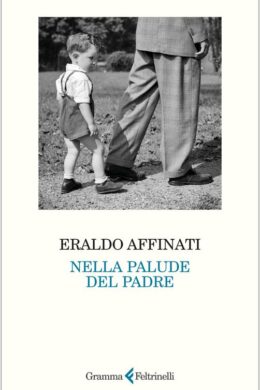
Nella palude del padre is not a conventional novel with an invented plot, but an autobiographical investigation in which Eraldo Affinati tries to reconstruct the hidden history of his father, Fortunato, and to understand how the wounds of previous generations shaped his own childhood, his relationship with his brother, his literary vocation and his work as a teacher. The book begins when a woman who has seen Affinati on television sends him an old family photograph. It shows three women standing in a wooded area and two children seated on the ground. The little boy, dressed in a white shirt and looking solemn and unhappy, is Affinati’s father. The girl beside him is Fortunato’s sister, Alberta. Their mother, Elisa, stands behind them, while the identities of the other two women remain uncertain. What is immediately noticeable is the absence of a father. Affinati treats this photograph as the entrance to a family “swamp”: a submerged world of abandonment, illegitimacy, poverty, war and emotional silence from which he believes his entire life emerged.
The photograph forces Affinati to confront the fact that both his parents came from traumatic histories they had never been able to express adequately. His father was an illegitimate child who had not been recognised by his biological father. His mother, Maddalena—usually called Lena—had lost her father during the Nazi occupation and had escaped from a deportation train. Neither parent possessed the education or emotional language necessary to explain these experiences to their children. As a result, Eraldo and his younger brother Riccardo grew up sensing that something catastrophic had happened before their birth without knowing exactly what it was.
Affinati begins his investigation with his paternal grandmother, whose identity is complicated even at the level of official documents. She appears under several combinations of names, although Fortunato always said that his mother was called Elisa. Born in Nettuno in 1894, Elisa moved to Rome and worked as a seamstress, apparently specialising in trousers. Affinati conjectures that she may have entered domestic service in the home of the Salvati family in via Alessandria. There she became involved with Umberto Salvati, the son of a coachman originally from Micigliano. Their first child, Alberta, was born in 1914, followed by Fortunato in 1915. Neither was legally recognised by Umberto.
Continue Reading for Free
Enter your email address to unlock the article and keep reading it for free.