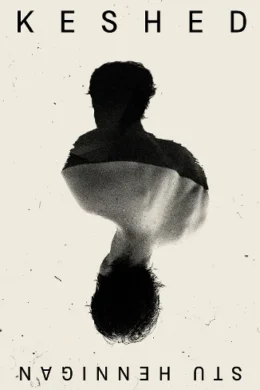
Stu Hennigan’s Keshed follows Sean Molloy, a working-class Yorkshireman whose life is shaped by inherited alcoholism, mental illness, class shame, fatherhood and an almost total inability to express pain except through intoxication and self-destruction. The narrative alternates between “THEN,” which reconstructs Sean’s relationship with Amanda and the birth of their daughter, and “NOW,” in which an emaciated, barely conscious Sean exists alone in their ruined house. The present-day sections initially conceal what happened to Amanda and Daisy, although it is immediately clear that Sean has suffered a catastrophe from which he has made no meaningful attempt to recover.
In the opening, Sean awakens surrounded by filth, broken furniture and empty bottles. He vomits repeatedly, discovers that he has soiled himself and washes beneath cold water because there is nothing else available. His body is skeletal, shaking and covered in old injuries. Despite being terrified of leaving the house, he forces himself outside because he needs alcohol. The prose imitates his fractured consciousness through unpunctuated phrases, broken typography and repeated words, presenting him as someone suspended between life, death and oblivion.
The past begins years earlier, when Sean is employed as a labourer by a grotesque plasterer called Big Marl. Sean is already drinking heavily and taking cocaine, but he remains young enough to treat addiction as part of an adventurous working-class identity. After finishing early one Friday, he travels to Leeds to visit his friend Rob. They drink cider and bourbon in Hyde Park before moving to a pub, where Rob introduces him to Amanda.
Continue Reading for Free
Enter your email address to unlock the article and keep reading it for free.