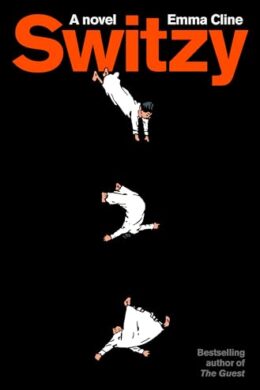
Switzy is a short, death-bound novel about David Hastings, an elderly wealthy American with advanced cognitive decline, traveling by private jet from the United States to London and then Zurich, where he has arranged an assisted suicide. It wants to be a devastating late-life interior monologue, a study of dementia, a reckoning with class, fathers, daughters, sexuality, money, betrayal, euthanasia, male cowardice, and the small vanishing objects that make up a life. Mostly, it is an immaculately controlled but suffocatingly repetitive death procession, so committed to mimicking David’s mental fog that it turns the reader’s own patience into the main casualty.
David is in his seventies, rich, divorced, ill, and quietly terrified. His brain is failing because of amyloid plaques and related neurodegenerative decline brain is failing because of amyloid plaques and related neurodegenerative decline, though he hears “amyloid” as “Amy Lloyd,” as if even the diagnosis has become a person to be irritated by. He loses time, forgets names, gets stuck in loops, wets himself, wakes in places he cannot explain, accuses people of stealing things he has misplaced, and cannot always tie his shoes or operate his phone. He has not told his daughter Rebecca the truth. He has told her only that he has “slowed down” or retired. The real plan is Zurich, paperwork, doctors, a woman named Anna Gould whom he privately calls “Ghoul,” anti-nausea pills, a bitter barbiturate drink, chocolate afterward, and a recorded death conducted with Swiss efficiency.
The novel opens on the private plane of David’s old friend Stearns, a wealthy businessman who has lent him the aircraft as a final favor. David is accompanied by Cody, his assistant, handler, aide, employee, quasi-son, and eventually death companion. Cody is young, careful, soothing, ambitious, gay, and almost frighteningly competent. He manages passports, itineraries, medications, hotel rooms, phone chargers, correspondence, assisted-dying forms, and David’s increasingly porous reality. David has reason to suspect Cody has quietly taken a substantial amount of money from him, perhaps in the mid-six figures. Instead of confronting him, David lets the thought dissolve. Cody has tethered himself to David’s decline; perhaps the money is simply another payment due.