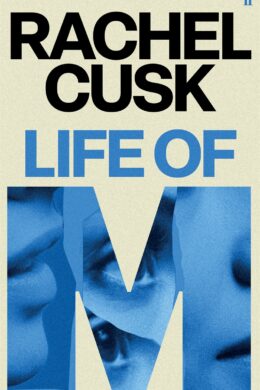
Life of M is a thinly fictionalized, essay-like portrait of a famous actress called M, filtered through a narrator who claims she wants to write M’s autobiography but ends up writing something closer to a cold philosophical possession. It wants to be a study of celebrity, childhood, acting, objectification, art, motherhood, illness, privacy, sexual representation, and the falseness of reality. Mostly, it is a beautifully polished but airless exercise in abstraction, where almost nothing happens except that the narrator stares at rooms, objects, weather, buildings, bodies, dogs, waiters, photographs, and M, then converts all of them into another solemn thought about reality.
The premise is simple. The narrator tells the actor M that she is thinking of writing her autobiography. M jokes that the narrator could “just make it up.” The book then does exactly that. M is a film star and fashion-brand model, famous enough that her face appears everywhere in advertisements, bus shelters, shops, and public imagination. She lives in a large house across the river, has children, dogs, a bodyguard, friends, family tensions, professional obligations, and a public image that has replaced most of her private self. The narrator, who met her in a bookstore and barely knew who she was at first, becomes fascinated by her as an emblem of visibility.
The opening establishes the book’s central opposition: the narrator feels ugly with experience, saturated by insignificance, while M has been damaged in the opposite way, by being seen too much and too early. M tells the narrator that childhood ended for her when she starred in a film as a child. The narrator compares this to a book she is reading by a woman sexually abused by her stepfather. Both the abused child and the child actress are placed outside ordinary time: one by trauma, one by film. The comparison is provocative but also heavy-handed. It flattens radically different experiences into the same Cuskian formula: to be seen is to be erased; to be objectified is to become objective; childhood ends when adult desire or public attention fixes you forever.