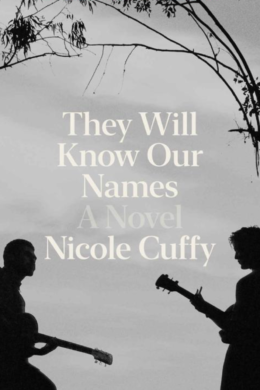
They Will Know Our Names is a sprawling music-biopic novel about two genius musicians, Hal Jansen and Rudy Amos, whose friendship is meant to become a myth of art, race, grief, addiction, fame, and spiritual brotherhood. It wants to be a grand American epic of blues, folk, country, rock, Civil Rights-era violence, dead children, bad fathers, holy music, cursed bodies, and the terrifying intimacy of being truly known by another artist. Mostly, it is an overinflated, reverential, heavily symbolic novel that keeps confusing emotional repetition with grandeur.
The book opens in 1988 with Hal Jansen already dying on his Montana homestead. His body is failing, he is weak, coughing, smoking, and clinging to the few pleasures left to him. He has just mailed a package to Rudy Amos and keeps calling Rudy every day, not because he has anything urgent to say, but because Rudy’s voice is one of the last things that still feels like life. The prologue gives away the whole design: Hal and Rudy are “missing pieces,” brothers beyond blood, twin flames of music and self-destruction. The novel then spends hundreds of pages making sure we understand that point over and over again.
Part One, “The Chitlin Circuit,” begins in 1963. Hal is a rich white Arkansas singer-songwriter, already famous enough to be recognized, already unstable, already stuffing himself with cigarettes, cocaine, alcohol, and literary despair. He is traveling with two friends, Jim and Beau, when he wanders into a Black blues joint in Baton Rouge. There he sees Rudy Amos play guitar. The scene is written as revelation: Rudy’s music is not just good, it is conjure, spell, lightning, dirt, ancestral force, bodily possession. Hal immediately understands that Rudy is the real thing and insists on bringing him into the studio.