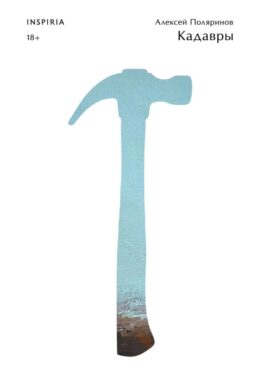
Cadavers is a Russian speculative road novel about grief, state violence, memory, and the way a country learns to live beside the bodies of its dead children. Its central image is simple and horrifying: across Russia, motionless corpses of children have appeared in fields, towns, swamps, mines, and roadsides. They are called “кадавры.” They stand upright, fixed in place, partly mummified, often crusted with salt. Nobody knows exactly what they are, why they appeared, or why they cannot be moved. Over time, they become not an emergency but a feature of ordinary life.
The main characters are Dasha Silina and her brother Matvey. Dasha is a former researcher connected to the Institute that once studied mortuary anomalies. She has emigrated to Germany after the Institute is declared undesirable and its founder, Galina Rodchenko, is imprisoned. Matvey is her older brother: loud, comic, unreliable, an ex-conman and ex-prisoner, now driving their old Niva, nicknamed “Samurai.” They travel through the south of the country to document cadavers for a revived research project backed by Chinese contacts and Dasha’s old mentor, Professor Vidich.
The book opens with Dasha and Matvey walking through an overgrown ravine near Rassvet to find MA-51, a cadaver standing near an abandoned church. Dasha is in her forties, physically damaged by an old spinal injury, and the expedition exhausts her. She remembers Vidich’s advice that every traveler needs a song: “Песня в походе важна не меньше удобной обуви.” When they find the dead boy, she performs the Institute protocol: height, photographs, sensors on the face, finger count, pupil count, sound recording. The microphone gathers not speech but silence, a procedure she wryly thinks of as “сбор тишины.”
Continue Reading for Free
Enter your email address to unlock the article and keep reading it for free.