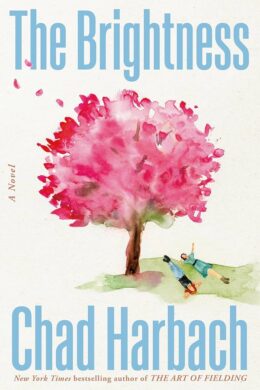
This is a sprawling campus novel about friendship, feminism, sex, performance, internet fame, institutional power, grief, and the unstable boundary between political action and personal desire. It returns to Westish College, the small Wisconsin liberal-arts school that formed the setting of The Art of Fielding, but the emotional center is now a group of women whose lives become entangled through an initially mischievous feminist project that grows into a national controversy. The novel is especially concerned with Irma Friske, a twenty-one-year-old Westish senior; her magnetic and troubled friend Dahlia; Irma’s older best friend Pella Affenlicht; and the expanding public world represented by the online publication The Brightness.
The novel opens at dawn in rural southwestern Wisconsin. Irma is preparing to leave her family’s dilapidated farmhouse and drive six hours back to Westish for her senior year. She is small, serious, intellectually intense, socially awkward, and more comfortable with books than with conventional college life. Her family immediately establishes several of the emotional pressures that shape her. Her older brother Jacob, twenty-four, works at a warehouse and spends his nights drinking beer and playing video games. Irma remembers that they were once close as children, roaming neighboring farms and catching toads, but Jacob has become distant and almost unreachable. Her father, Stephen, is a physician’s assistant who quietly holds the family together despite Irma’s sense that he has never found a stable place for himself in the world. He gives her three new fifty-dollar bills for the semester, a gesture that moves her because she imagines all the awkward effort behind it.
Irma’s mother, Ada, is more complicated. Ada is intensely Catholic, prone to migraines, emotionally controlling and suspicious of her daughter’s independence. When Irma says goodbye, Ada embraces her and recites the Hail Mary. Irma joins in even though she does not believe in God. This contradiction is important: Irma has rejected Catholic doctrine intellectually, but its language, guilt, rituals and moral structures remain embedded in her. She wears a gold cross inherited from her great-grandmother and keeps a wooden rosary around the rearview mirror of her ancient Dodge Ram. She is an atheist whose imagination remains profoundly religious.
Continue Reading for Free
Enter your email address to unlock the article and keep reading it for free.