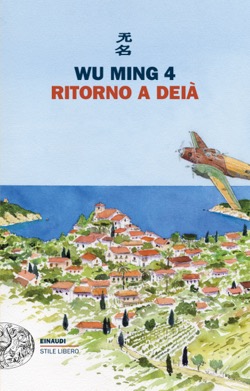
This is a historical novel that blends real figures, fictional narration, myth, and memory to tell the story of the small Mallorcan village of Deià and the extraordinary group of artists who transformed it during the twentieth century. The novel is not only about Robert Graves and Laura Riding, the famous poet couple who settled on the island, but also about the villagers who watched them arrive, admired them, misunderstood them, and slowly realised that behind the legend were simply flawed human beings. The story is told through a collective “we”, the voice of the people of Deià, who look back on the past and attempt to reconstruct the lives of those who passed through their village.
The novel begins during a period of political instability, when the shadow of fascism and the Spanish Civil War reaches the island. An Italian fascist arrives in Deià wearing a black shirt, welcomed by Roman salutes, flags, and nationalist slogans. His arrival represents a moment when history suddenly enters the lives of ordinary people. The villagers understand that something has changed and that everyone will eventually be forced to choose a side. The novel immediately establishes one of its central ideas: history is not only made by famous leaders and soldiers, but also by ordinary people who find themselves trapped inside events much larger than themselves.
Against this political background, the novel introduces its two central figures: Robert Graves, known by the villagers as “don Roberto” or “the Captain”, and Laura Riding, whom they call “the Witch”. When they first arrive in Deià, the villagers do not know what to make of them. Laura is a mysterious American poet, intelligent, demanding, and charismatic. Robert is an English poet and former soldier who survived the First World War. To the villagers, they seem almost unreal: they are foreigners who speak about poetry, mythology, and art, yet they also plant trees, grow vegetables, collect stones, and live a practical rural life. They appear to exist between two worlds — ordinary and extraordinary, physical and spiritual.
Continue Reading for Free
Enter your email address to unlock the article and keep reading it for free.