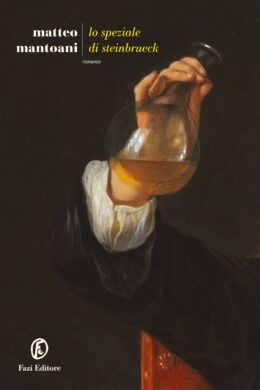
Lo speziale di Steinbrueck is a historical mystery and life-story built around Giacomo d’Andrea, a poor Friulian boy who becomes the wealthy Austrian merchant Gottlob Kramer. The novel moves between two main timelines: Giacomo’s childhood and apprenticeship in the late 1600s and early 1700s, and his return to his native village of Orgnasso in 1738, where a murder forces him to face everything he has spent his life trying to forget.
The book opens in 1738 with Gottlob travelling with his son Torsten through Friuli. He is rich, cynical, old, sharp-tongued, and convinced that crowds, poverty, and sentiment are dangerous. On the road near Orgnasso, they find villagers gathered around the body of a young woman in the dry riverbed of the Meduna. She has been brutally mutilated: her scalp and famous golden hair have been removed. Gottlob notices that she is not a peasant: her nails and hands are too well kept. In her fist he finds a fossil, a “serpente di pietra”, which he quietly keeps. The woman is identified as Maddalena Francescon. Gottlob agrees to carry the body into the village, though he instantly regrets it.
Orgnasso is his birthplace, but he has not returned for decades. He was once Giacomo, the illegitimate son of Maria d’Andrea, a poor woman dying of disease. The Friulian proverb at the start, “Chi ha tutto, non ha niente”, becomes the hidden key to the whole novel: Gottlob has wealth, status, a family, and a business empire, yet he is spiritually empty. Seeing Orgnasso again awakens memories of hunger, shame, and the golden-haired girl Marietta, whom he loved as a child.
Continue Reading for Free
Enter your email address to unlock the article and keep reading it for free.