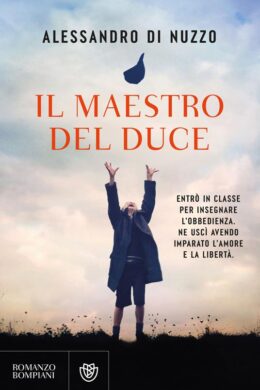
Il Maestro del Duce is a historical novel in diary form about Guido Centofanti, a young Fascist schoolteacher from Tuscany who is sent in 1937 to Morra Terzana, a remote mountain village in southern Italy. The novel wants to be a story of political awakening: a naïve, Mussolini-worshipping teacher arrives as an agent of Fascist education, meets poverty, intelligence, suffering and resistance, and eventually learns that freedom matters more than ideology. The problem is that this moral arc is so heavily signposted from the beginning that the book often feels less like a novel than a prearranged lesson in anti-Fascist conversion.
Guido begins his diary with an almost embarrassing devotional address to the Duce. Mussolini is not simply his political leader; he is a sacred figure, the imagined reader of every page, the source of purpose, courage and meaning. Guido sees his teaching assignment as a mission from the regime. He is proud of having placed third in the national teaching competition and of having volunteered for a “disadvantaged” post. He comes from Trespondoli, near Arezzo, with a disabled father, a devoted mother, a vague attachment to a respectable young woman named Lidia, and a head full of Fascist rhetoric, classical allusions and schoolbook certainties.
His journey south already undermines the Fascist fantasy he carries with him. Trains are late, roads are broken, bridges are unfinished, and the final approach to Morra Terzana must be made by mule. Guido tries to reinterpret every inconvenience as a noble test of will, but reality keeps making him look foolish. On the mountain path he sees a dying wild sow trying to nurse her piglets, a grotesque omen of the world he is entering: maternal, violent, wounded and indifferent to his slogans.
Continue Reading for Free
Enter your email address to unlock the article and keep reading it for free.