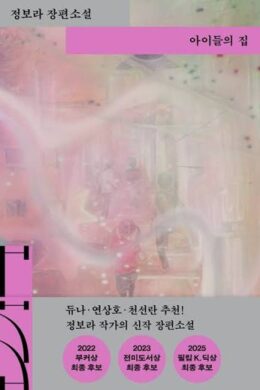
The House of Growth is a strange, tender, angry science-fiction ghost story about children, public care, disability, adoption, technology, institutional violence, and the question of who has the right to call a child “mine.” It is set in a future Korea where child-rearing is treated as a responsibility of the whole society. There are state-supported “children’s houses” where children can live, sleep, eat, study, receive medical care, play, and be protected. Parents and guardians may raise children at home, but children are not treated as property. If a child wants to stay at a children’s house, a parent cannot simply drag them away. Every citizen also has a monthly caregiving duty, and the protagonist, Mu Jeong-hyeong, fulfills hers at one of these children’s houses.
Mu Jeong-hyeong is not a professional childcare worker. She works as a housing-environment inspector, checking public apartments before and after residents move in: light, ventilation, water, wiring, hazardous substances, pests, accessibility, and other conditions. She grew up partly in a children’s house herself, after her mother’s disability and trauma made family life unsafe. She still has strong ties to the system, especially through her friend Jeong Sa-gak, called Square, who became a childcare teacher and later adopted a child named Garu, or Powder. The world of the children’s house is noisy, funny and chaotic: children called Triangle, Inverted Triangle, Jump Rope, Ladder, Handle and others race around ramps, wheelchairs, crutches and robots. A cylindrical robot named Alice patrols the house, nags everyone about washing dishes and cleaning, and gradually becomes one of the book’s most lovable characters.
The novel opens with a horrific, fairy-tale-like scene. A woman lives with a dried corpse. She waters it, believing it will revive. At night, the walls creak and she feeds dolls into a gear mechanism hidden in a cupboard, thinking that the walls will otherwise close in. She believes a living baby would work better than dolls, but tells herself she must not bring one into the house because it would cause trouble. The corpse tells her it is dead, but she refuses to believe it. Eventually the corpse swells, its bandages split, and countless pale baby mantises emerge. A huge mantis with a dead woman’s face rises from it and devours the woman. This nightmare image becomes the key to the mystery: the house is haunted by a dead mother and by the deaths of children.