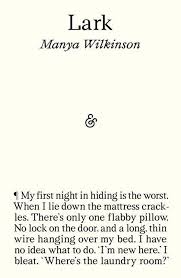
Lark is a dystopian, darkly comic novel about ageing, memory, fear, desire, and the way a society disposes of old people while pretending to protect them. It is told almost entirely through the voice of Lark, an elderly New York woman whose mind is brilliant, neurotic, funny, spiteful, frightened and increasingly unstable. The story moves between the present, in which she has been hidden away in a secret care facility because older people are being persecuted and removed, and the past, in which she remembers her girlhood, lovers, failed marriage, motherhood and long history of evasions.
The novel opens with Lark already “in hiding.” She is in a supposedly secret refuge in the Bronx, put there by her son Nolan because elderly people have become illegal, restricted, relocated and hunted. The place resembles a mixture of safe house, care home, prison and absurd retirement facility. Lark has a roommate called Harriet, a number she cannot remember, an identity tag and a depressing room with cheap furniture, a mattress that crackles, no bath, no privacy and a mysterious wire hanging above the bed. She thinks of herself like Anne Frank or Dostoevsky’s Underground Man, hiding from a hostile regime, but she is also vain, snobbish, bodily anxious and furious about the lack of good coffee, books and bedding.
Before she is taken into hiding, Lark has a significant birthday: she has reached the age at which she is officially illegal. In this dystopian New York, older people are increasingly treated as a social burden. There are age laws: no air travel, no public transport alone, no certain activities, no free movement. Clinics for the elderly have been closed or converted into spaces for children. Older people are “relocated,” sometimes seized from apartments at night, loaded into black trucks, or ordered by official letters to report for “work.” Youth flags hang from balconies. Children and young people are powerful, aggressive and politically central. Lark hates and fears them, but she also recognises that society has turned age itself into a crime.