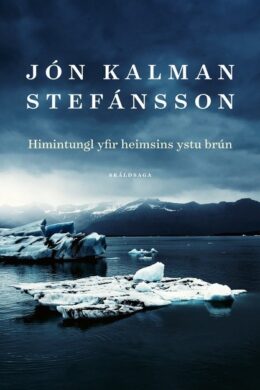
This is a historical, lyrical novel set mainly in the Westfjords of Iceland in 1615, during and after the massacre of shipwrecked Basque whalers usually remembered as the “Spanish killings.” It is narrated by Pétur, the priest at Meyjarhóll on Brúnisandur, who writes through a stormy October day and night to a beloved “you.” The writing is part confession, part love letter, part witness statement, part attempt to save the truth before power and fear bury it.
The novel opens in October 1615. Pétur is terrified because men are gathering under Ari Magnússon, sheriff of Ögur, to hunt and kill the shipwrecked “Spaniards.” The word “Spaniards” is itself imprecise, because many are Basques. Their ships have been wrecked far from home. Some have drowned, others are scattered, hungry and desperate. Officially they are declared outlaws and lawful to kill, supposedly because they have hunted whales without the king’s permission, stolen, threatened Icelanders and behaved violently. Pétur doubts the simplicity of this story. He knows some of the foreign sailors personally. He remembers that when English ships wrecked years earlier, Icelanders tried to save the men. Now they sharpen swords in the name of king and God.
Pétur begins by remembering his arrival at Brúnisandur in 1609. He is educated, restless, gifted with languages and words, raised at Hólar under the protection of Bishop Guðbrandur Þorláksson. There are rumours around him: that he may be Guðbrandur’s illegitimate son, that his years in England involved scandal, that he is too clever, too unstable, too soft, too full of questions. He arrives at Meyjarhóll with books, manuscripts and paper rather than clothes. His housekeeper is Dóróthea, a formidable, blunt, physically powerful woman from Arnarfjörður. She cannot read, because the letters seem to move and tangle before her eyes, but she remembers perfectly anything read aloud to her. Pétur begins reading sagas, letters and drafts to her, and she becomes his judge, anchor and conscience.
Continue Reading for Free
Enter your email address to unlock the article and keep reading it for free.