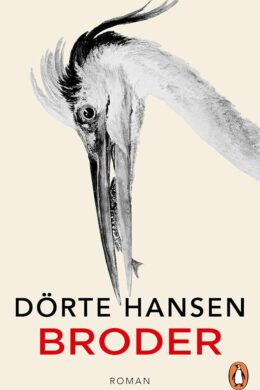
Broder is a rural family novel about inheritance, resentment, farming, animal welfare, ageing, suicide, and the terrible pull of the farm even for those who have been pushed away from it. The story is set in North Frisia, in a flat coastal landscape of wet fields, wind, ditches, herons, barns, machines and dying rural traditions. Its main character is Broder Bahnsen, a large-animal vet approaching sixty. He was born on the Bahnsen farm and wanted nothing more than to become a farmer, but because his twin brother Henning was born a few minutes before him, Henning inherited the farm. Broder left, became a vet, made a different life with his French artist wife Marie-Claude and their daughter Claire, but the farm never really left him.
The novel begins in February, the bleakest month. Broder has spent another exhausting night on call as a country vet. He has driven his drunk old friends home from a night out: Andi, Johan and Holger, men who have known one another since youth and are still half comic, half pathetic in their ageing routines. Then Henning calls him to the family farm because a cow is having a disastrous birth. Henning has waited too long before asking for help. Broder arrives angry, but he saves the cow and the twin calves, even giving breath to one calf through its nose. His father Paul, now old but still deeply connected to the animals, helps him. For a moment Broder feels the old farm magic: father, sons, cow, calf, body, skill, touch. Henning takes a photo of the twin brothers with the twin calves. But then Broder goes into the farmhouse kitchen and sits in what still feels like his rightful place. The old humiliation returns. He remembers that only one son counts on a farm: the one who stays. He becomes so violently angry that he has to leave. On the way home he almost crashes, vomits by the roadside, kicks dents into his van and frightens his old hunting dog. The chapter ends with Broder watching the morning light and briefly imagining the freedom of a bird in flight.
The second chapter shifts to Ellen, Henning’s wife. She walks her daily “breathing round” across the flat land while thinking about the farm, her in-laws, her children and the new life forced on her by modernisation. The old milking parlour has been replaced by a robotic milking system, and Ellen, who spent her life milking, suddenly has time she does not know what to do with. She is efficient, dutiful and emotionally contained, but inside she carries enormous grief. Years earlier, her little daughter Mieke died in an accident on the farm. Ellen had been milking; Paul was there; Henning was on the combine; Marga, Henning and Broder’s mother, was cutting beans; Mieke and her brother Marten were playing. Mieke jumped or fell into a trailer of grain and suffocated in the wheat. Ellen has never forgiven Marga for being “at the beans” instead of watching the children, and also resents that Marga did not cry at the funeral. In the cellar, Ellen has recently found jars of beans that Marga preserved on the day of Mieke’s death. The sight brings back a buried rage so powerful that Ellen rips out Marga’s flowers. Yet Ellen also knows Marga helped her afterwards, cooking and caring when Ellen could barely function. The chapter ends with Ellen back in the calf shed, helping Paul feed the weaker of the newborn twin calves. For one morning at least, three Bahnsens are working together.