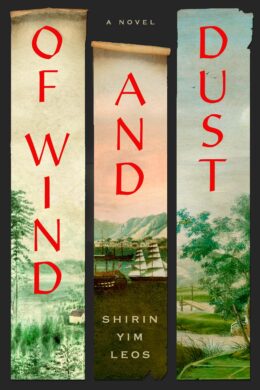
Of Wind and Dust is a historical family saga about three women bound to the same Chinese patriarchal household: Yook Lan, the first wife; Mary, the Indigenous Suquamish second wife; and Guai Fong, the younger third wife. It moves between Toi Shan in southern China, Puget Sound in Washington Territory, Seattle, Hong Kong, and the Chun family’s transpacific businesses. The book is about marriage, migration, famine, duty, motherhood, jealousy, women’s confinement, and the brutal emotional costs of family survival.
The novel begins in Toi Shan with Yook Lan, who is “born married.” Before her birth, her father of the Woo house and Old Boss Chun make a bargain: if their unborn children are one boy and one girl, they will be married. Chun has a son, Han Ming, and Woo has a daughter, Yook Lan. From early childhood, she is trained not as a free child but as the future Dai Tai, the Great Wife of the Chun house. She is forbidden to run and play, taught dignity, watched constantly, and valued not for herself but for the advantageous marriage she represents.
When Yook Lan is six, her mother and Amah begin binding her feet. The pain is extreme, and her mother tells her to learn to ignore it. But famine interrupts the process. China is in chaos: wars with foreigners, famine, brigands, and the Taiping “Long Hairs” have left the countryside starving. Yook Lan’s father seals the family compound, feeds only those inside, and lets the desperate outside starve. He later explains this as duty: a man’s first responsibility is to make sure his own family starves last. This harsh lesson becomes one of Yook Lan’s governing principles.
Continue Reading for Free
Enter your email address to unlock the article and keep reading it for free.