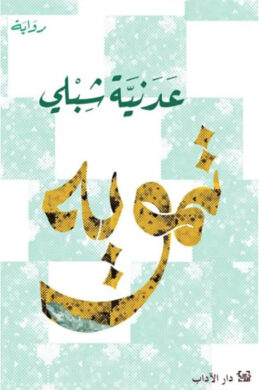
Adania Shibli’s Delusion unfolds not as a linear story driven by plot twists or dramatic resolution, but as an accumulation of lived moments shaped by occupation, surveillance, repetition, and uncertainty. From the opening pages, the novel situates the reader inside a sensory world where landscape, weather, language, and memory are inseparable from political power. The story begins with a car journey through heavy rain, mud, and mist, moving across Palestinian land marked by almond and olive trees whose cycles of growth and damage mirror the precariousness of human life beneath them. The rain blurs vision and saturates the soil, creating an atmosphere of foreboding, and inside the car sit a brother and his younger sister, whose relationship is defined by restraint rather than overt intimacy. The brother drives with focused tension, offering instructions in a controlled voice, while the sister watches the world beyond the windshield with intense attentiveness, already aware that movement through space in this land is never neutral.
Their journey is soon interrupted by a military checkpoint, an encounter rendered with chilling calm rather than spectacle. Soldiers signal the car to stop, order the brother out, and examine his documents as rain falls steadily around them. The sister remains inside the car, silent and watchful, registering the ritualized nature of this encounter: the radios, the glances, the power exercised without explanation. There is no explosion of violence, yet the threat is constant, implicit in every gesture. When the brother is finally allowed to return and they drive on, the fear does not dissipate but settles into the narrative as a persistent undertone, establishing checkpoints not as isolated events but as recurring structures that shape everyday life.
As the car passes through towns, the sister notices slogans painted on walls calling for freedom and resistance, their colors bleeding slightly under the rain yet remaining legible. These fragments of writing catch her attention, and she reads them carefully, sensing that words themselves are sites of struggle. Language here resists erasure even as it is subject to it, and this early focus on written slogans anticipates the novel’s sustained engagement with language as both a tool of domination and a medium of survival. The journey is further disrupted when masked youths throw stones at military vehicles, forcing the brother to stop abruptly as chaos erupts and vanishes just as quickly. The sister observes the arc of stones through rain-soaked air, the raised weapons, the sudden dispersal, absorbing the reality that resistance and danger can surface and disappear without warning.
Continue Reading for Free
Enter your email address to unlock the article and keep reading it for free.